
Running shoe: exterior view set
Side, top, bottom, rear and perspective views focus on the sole profile, panel layout and surface pattern. These views explain appearance rather than an internal mechanism.
Create exterior patent drawings that show your product’s shape, surfaces and requested views. Generate PNG illustrations for review, with figure numbers rather than mechanical part labels.
Free to try ·
Your patent drawing will appear here
Describe the view and components to generate a PNG for review.
A clear prompt helps direct the composition, while a human review checks the image against the invention.
Name the product and the distinctive shape you want to preserve, including its visible surface features.
Specify front, side, top or perspective views according to the surfaces your illustration should explain.
Review each PNG against the reference and check that views have not changed the design.
Name the product and the distinctive shape you want to preserve, including its visible surface features.
Specify front, side, top or perspective views according to the surfaces your illustration should explain.
Review each PNG against the reference and check that views have not changed the design.
Explore a shoe, smartwatch and faceted bottle to compare exterior views, visible surfaces and consistent product silhouettes.
Side, top, bottom, rear and perspective views focus on the sole profile, panel layout and surface pattern. These views explain appearance rather than an internal mechanism.
Complementary views explain the case outline, button position and visible strap relationship. Compare matching contours; figure numbers identify views without component callouts.
Front, side and perspective views describe the bottle’s asymmetric facets and rounded stopper. Keep the same outer silhouette across views without adding hidden construction.
Plan views around exterior coverage · Use contour lines to clarify surface form · Define solid and broken lines explicitly
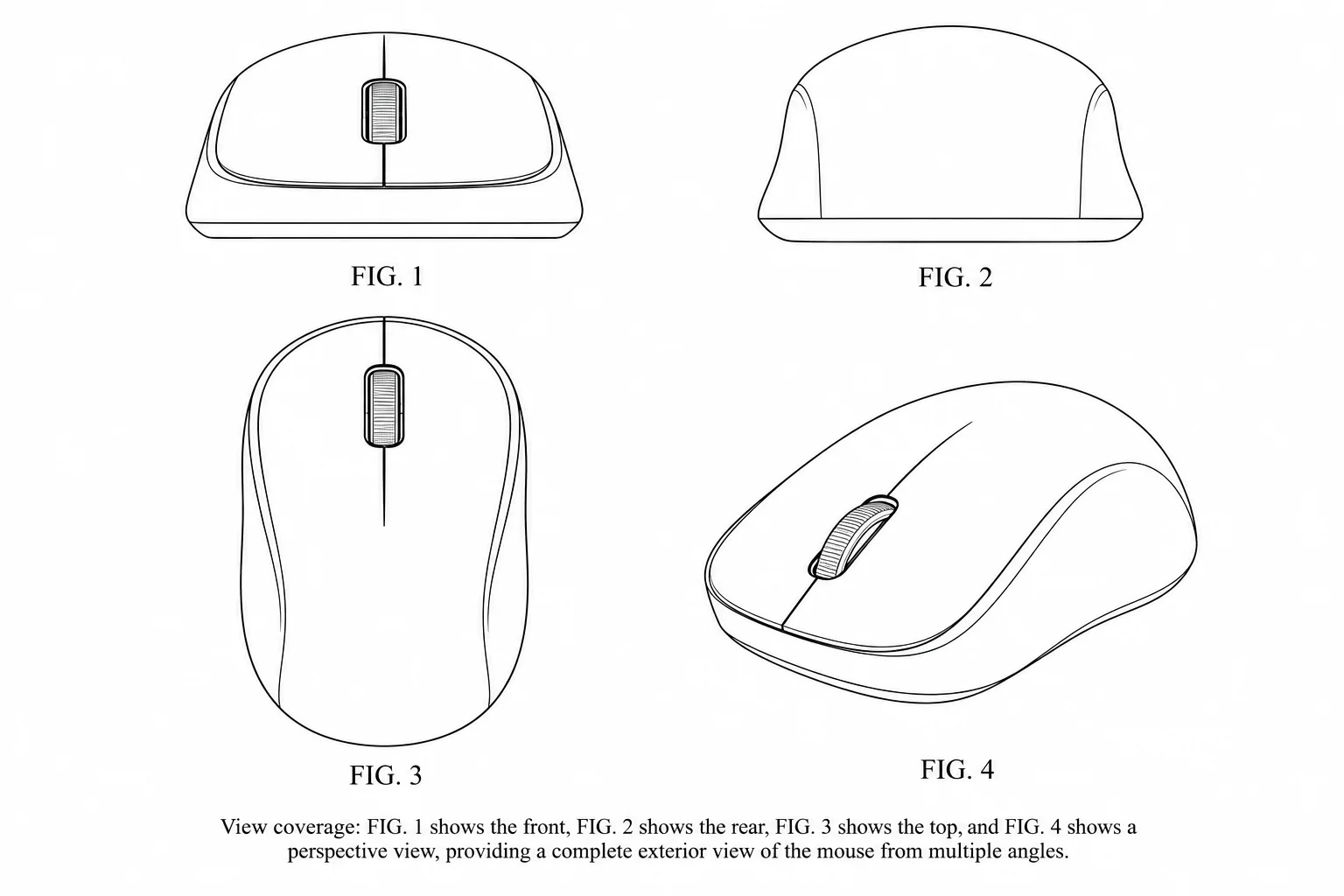
List the surfaces that each requested view must disclose. The mouse example uses front, rear, top and perspective views to cover its wheel and shell. Your product may need additional views; do not assume a preset view count is sufficient.
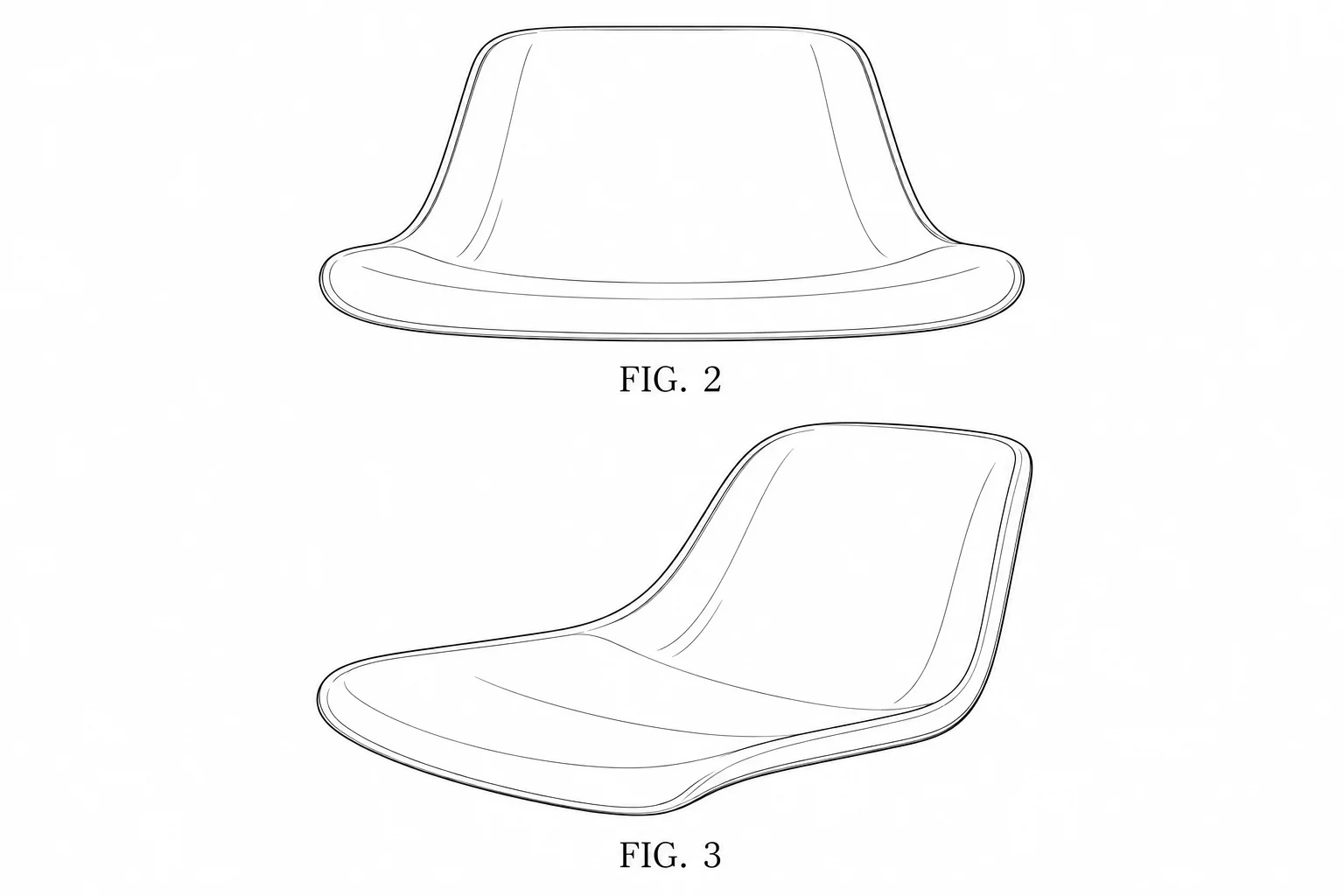
Describe whether a surface is flat, convex, concave or rounded at its edge. The chair-seat detail uses restrained surface lines to explain curvature without adding internal construction. Review whether those lines describe the intended shape rather than decorative texture.
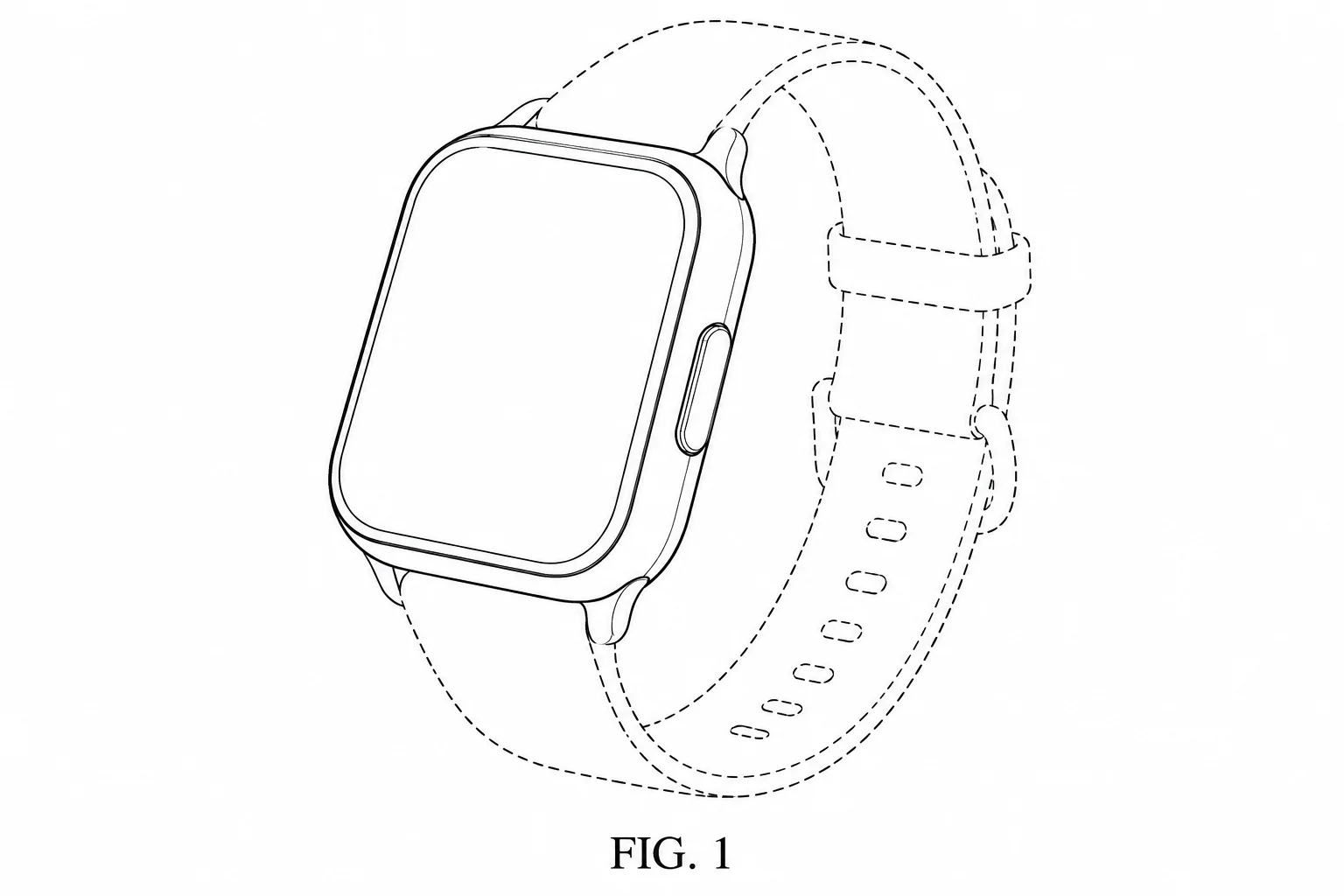
The watch illustration distinguishes a solid case from a dashed strap as an educational example of line treatment. State which portions you intend to show this way and have the disclosure reviewed professionally. The generator does not determine claim scope or guarantee appropriate broken-line use.
Compare subscription plans and one-time credit packs for AI patent drawing generation. Every generated image downloads as PNG and should be reviewed before use.
For occasional patent drawings.
Includes
For regular invention and product workflows.
Includes
For frequent, high-volume image generation.
Includes









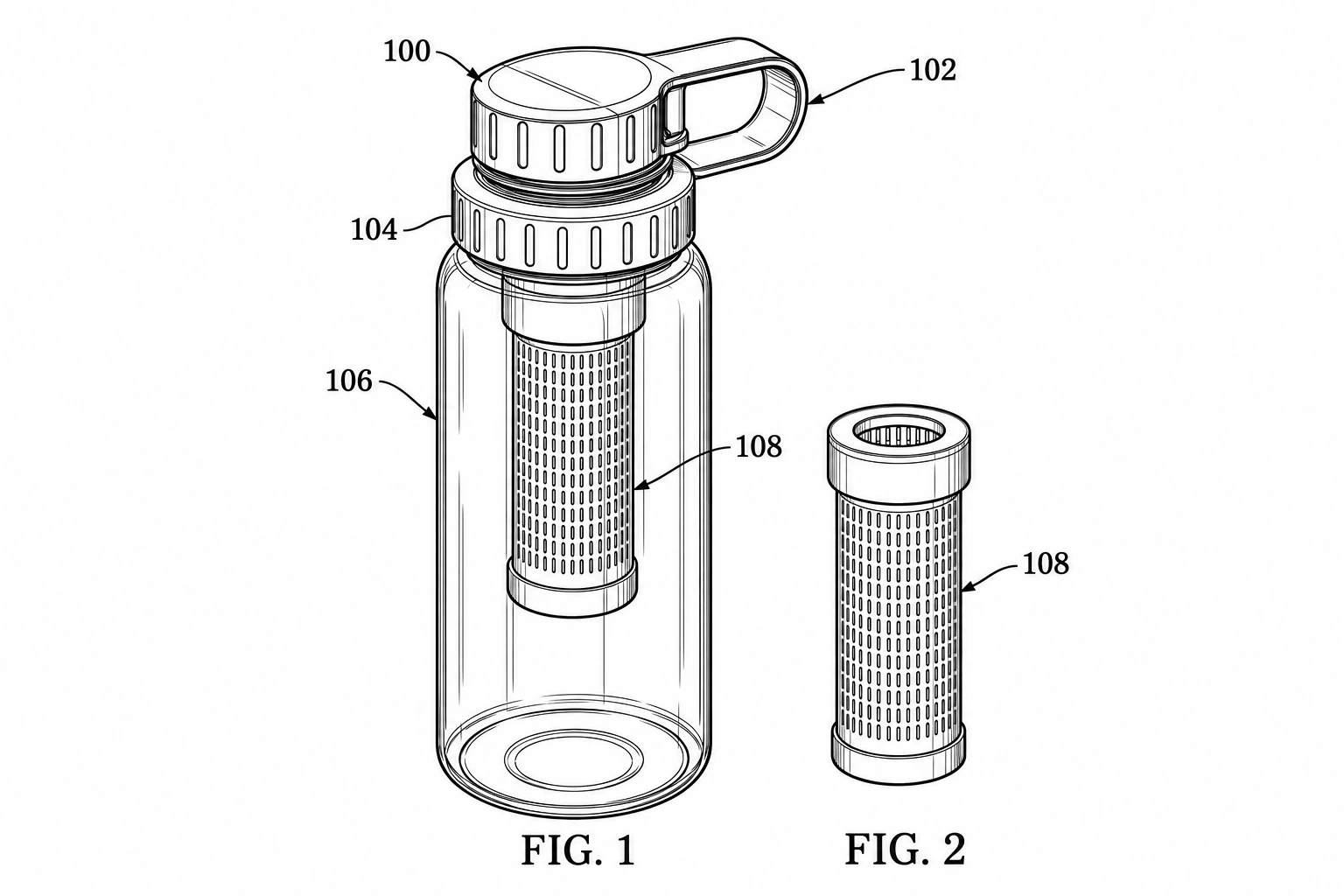 Patent drawing
Show product form with perspective and requested multi-view images.
 Patent drawing
Turn a product photo into a clear patent line drawing.
 Patent drawing
Transform a hand-drawn concept into clean technical line art.